AI deliverable
Built with
Tur3D.md is a live service website for 3D virtual tours in Moldova.
I made it in Codex through prompts, without a separate layout design.
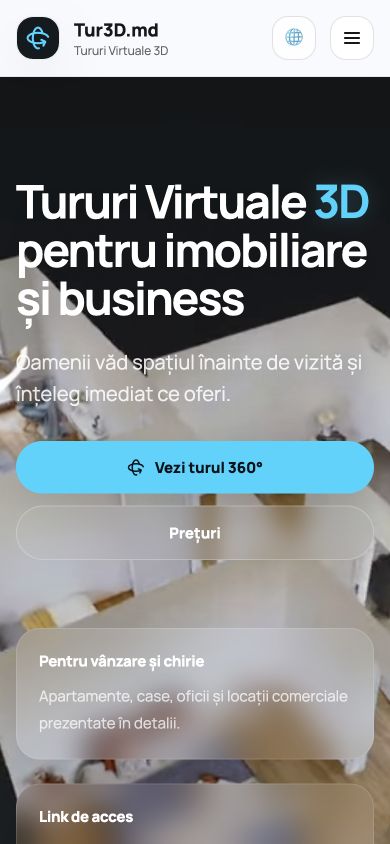
The brief
Make an unfamiliar service easy to buy
A 3D tour can be compelling once someone sees one. The harder part is helping a property owner or business understand the service, its cost and the next step before they make contact.
I treated the website as a small sales journey. A visitor should be able to inspect a real tour, see which spaces the service covers, understand how a scan becomes a shareable link, compare packages and ask for an offer. That sequence was the product brief I kept returning to in each prompt.
Function before polish
Show the service, then remove the questions
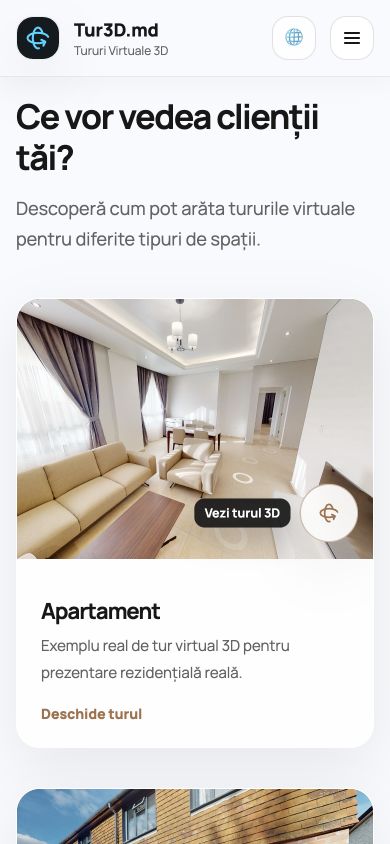
The most valuable interface decision is to let visitors try the format. Six real Matterport examples cover apartments, houses, commercial spaces, offices, showrooms and salons.
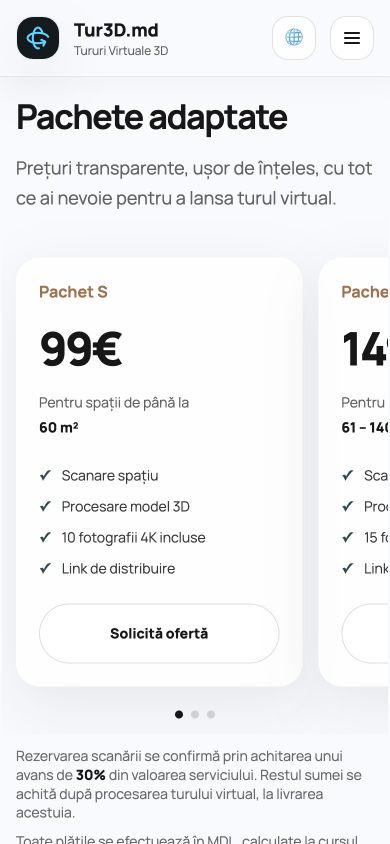
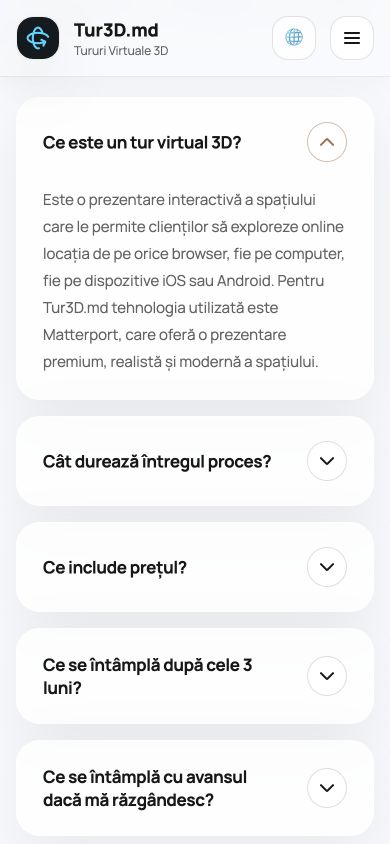
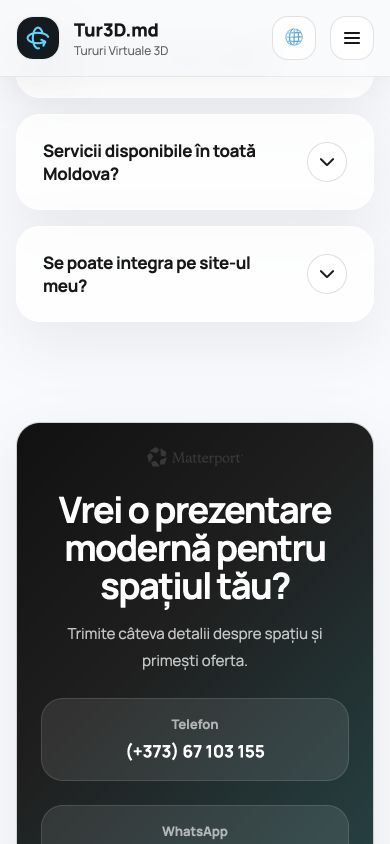
From there, three steps explain scheduling, scanning and delivery. Package cards make scope and price visible; the FAQ answers practical concerns such as timing, hosting, deposits and embedding. Phone, WhatsApp and email give visitors a direct route to an offer. The path works through clear sequence and direct actions.
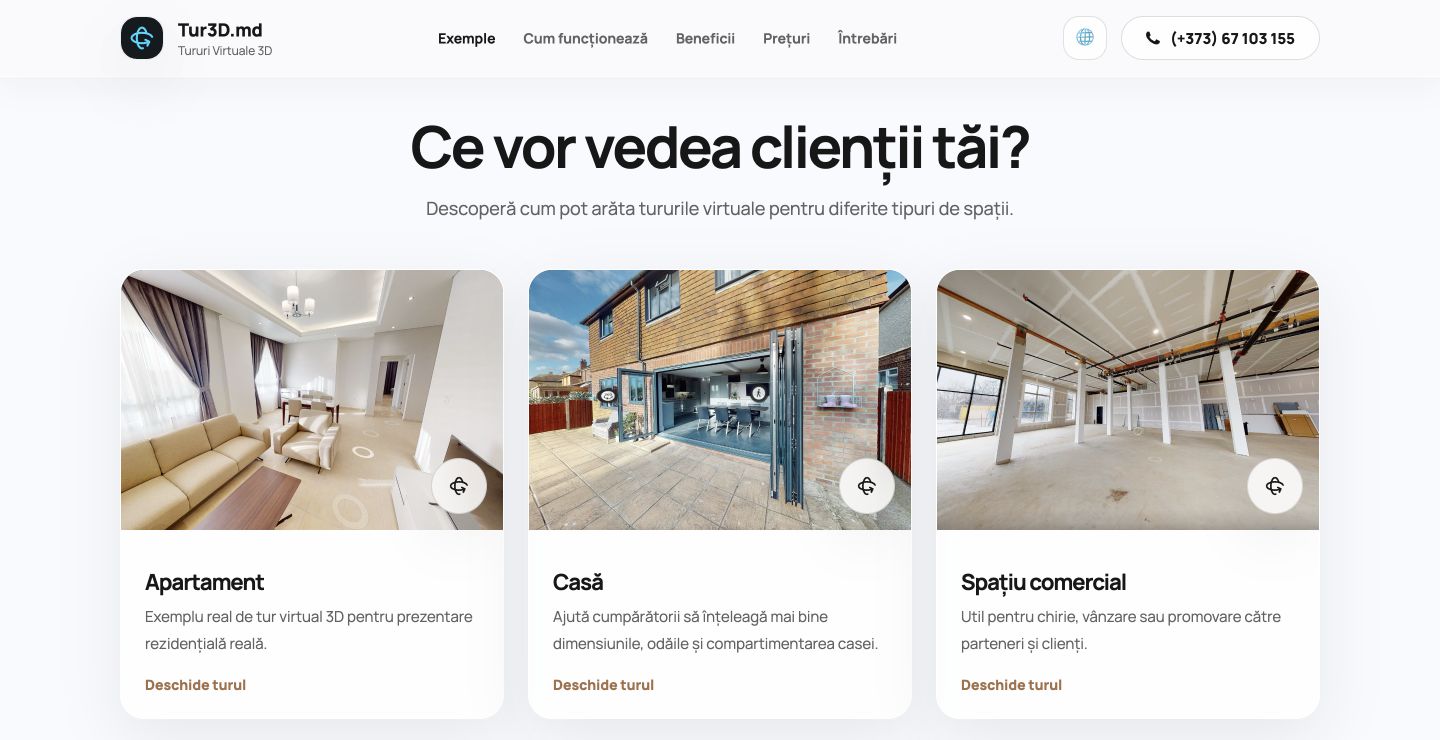
Visitors can open a real tour for the type of space they have in mind.
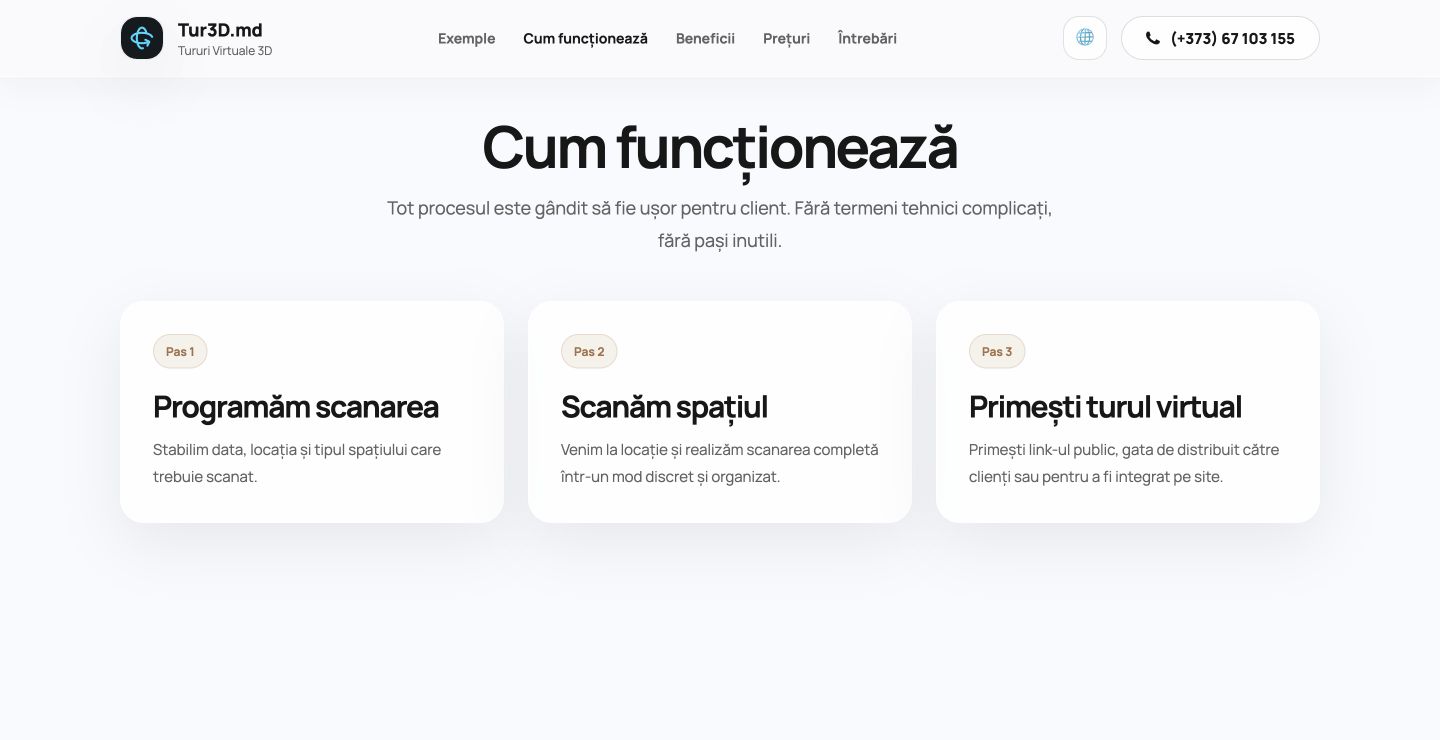
The service is explained in three steps without technical language.
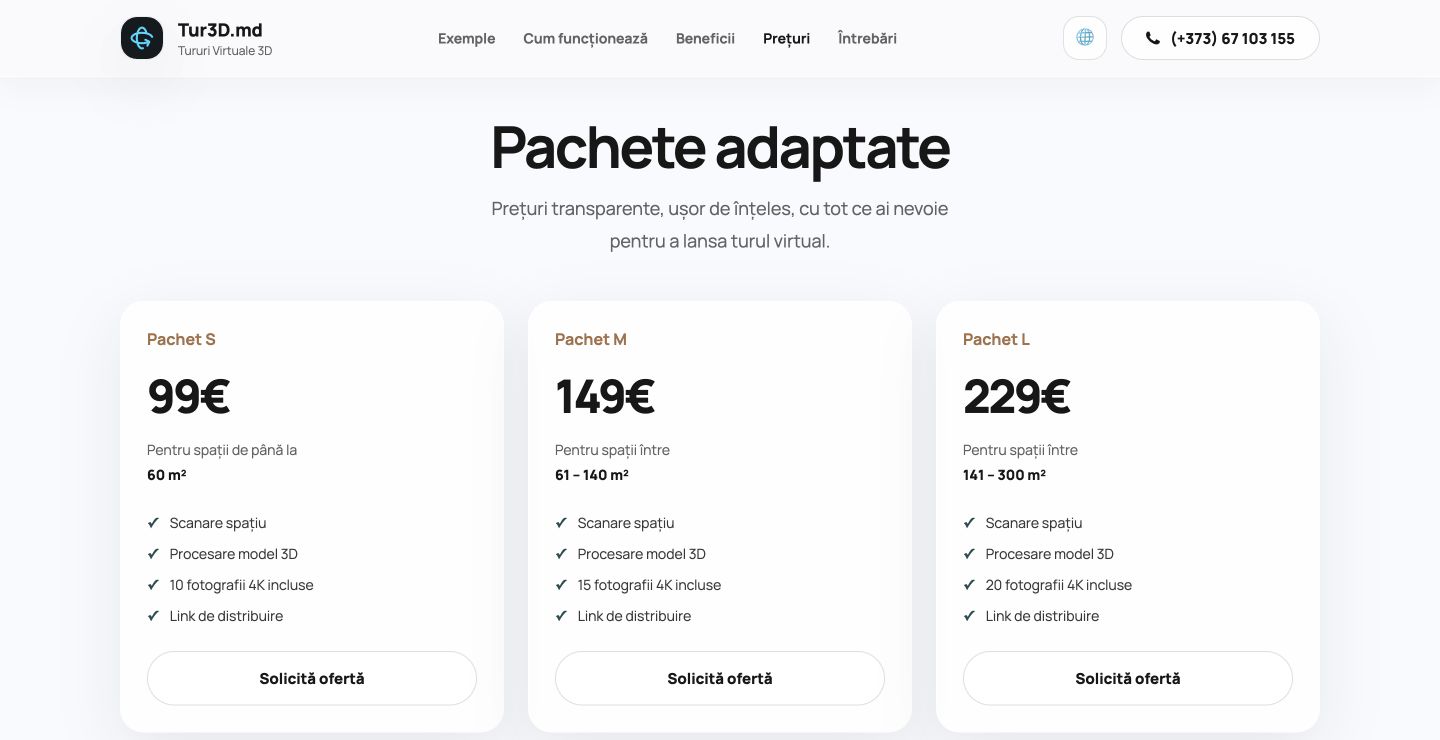
Area ranges, inclusions and calls to request an offer are visible together.
The same decision path works on a phone: view a tour, scan the examples, swipe through packages, resolve questions and contact the service. The mobile layout gives each step its own space instead of shrinking the desktop cards.
Three languages, one priority
Romanian carries the main experience
The site is available in Romanian, Russian and English. Romanian came first and received most of the functional and visual attention because it is the primary local experience.
Russian and English extend access for other visitors and support multilingual search discovery. They carry the core offer, examples, pricing and contact paths, but I would not present the three versions as equally refined. That priority was a deliberate way to finish the most relevant journey first.
Functional and visual baseline
Accessible offer and search coverage
Accessible offer and search coverage
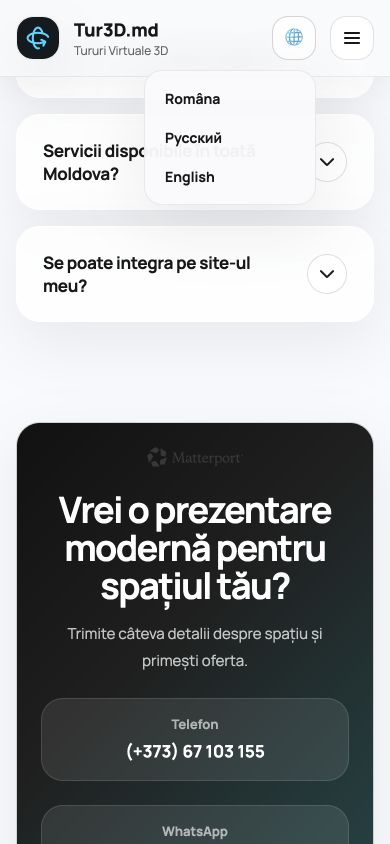
All three versions are reachable from the live site.
Findability
SEO was part of the product structure
A service site has to be found by people who already know their property type and location. That made search intent a content and information architecture problem, not a final metadata task.
Beyond the main Romanian page, the site has dedicated pages for categories such as apartments, houses and commercial spaces, and more specific pages such as a two-room apartment in Chișinău. These pages pair a relevant tour with focused copy, breadcrumbs and the same enquiry route. I also checked page titles, descriptions, canonical URLs and language alternates on the live site.
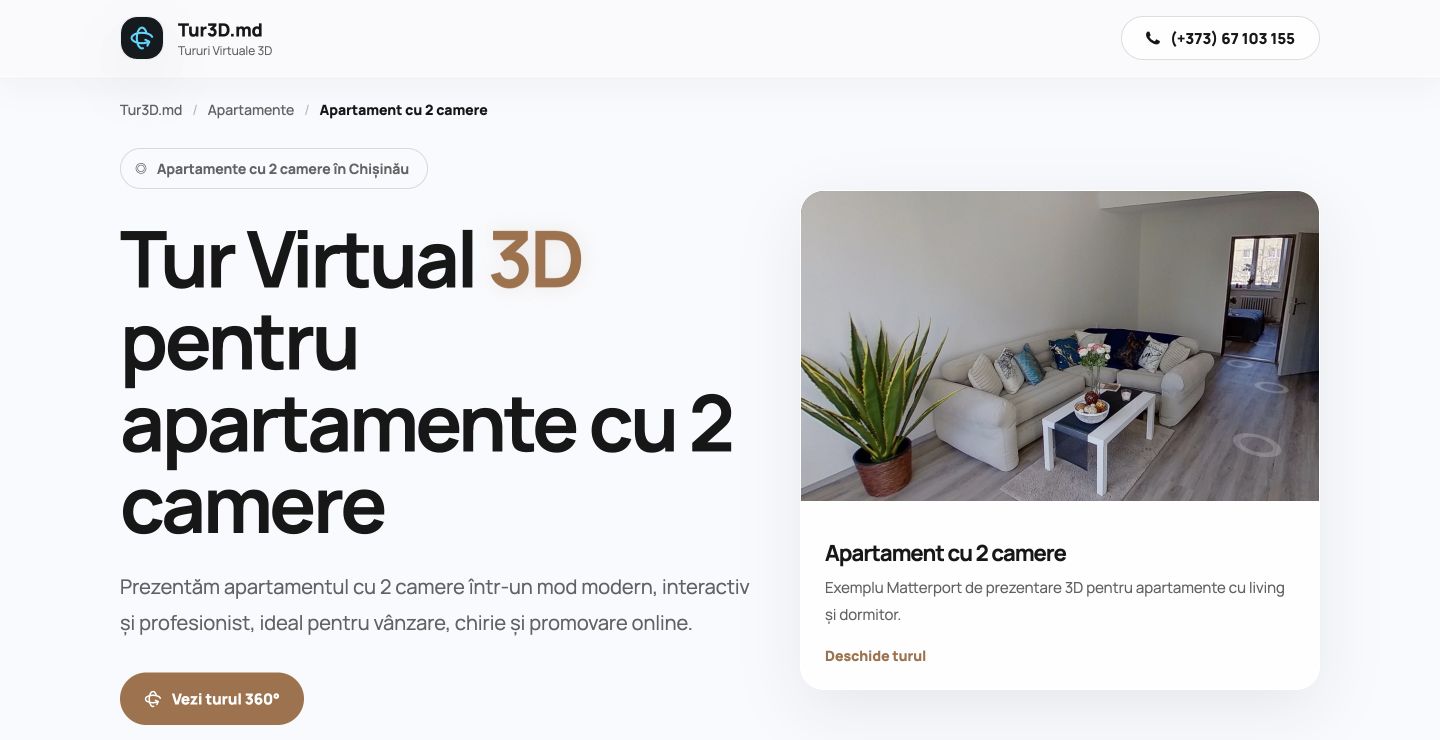
A specific property query gets a specific page and a direct path to the tour.
How it was made
From prompt
to product
This was my first real deliverable made with AI in Codex. There was no Figma file or approved layout to translate. The pages, layout and code emerged from prompts and successive review of the running site.
This is AI slop in the literal production sense: the interface was generated and revised in Codex from prompts. The visual layer has generic moments and lacks a carefully art-directed design system. My contribution was setting the right constraints, checking the customer path, finding missing answers and asking for corrections until the service was understandable and usable. The prompts accelerated execution; product judgment shaped what shipped.
Show a real tour and make the offer legible.
Build directly in Codex, without a layout file.
Fix gaps in examples, pricing, mobile and contact.
Add language versions and specific search pages.
A starting prompt you can copy
Build a responsive website for a 3D virtual tour service in Chișinău, Moldova. The primary audience is Romanian-speaking property owners, agents and local businesses. Treat Romanian as the main product experience; add Russian and English versions for access and search discovery.

The visitor must be able to: open real Matterport tour examples for several space types; understand a three-step scan and delivery process; compare clear packages by floor area, inclusions and price; read practical answers about timing, deposit, hosting and embedding; and contact the business by phone, WhatsApp or email.

Start from the customer journey, not a visual mockup. Make mobile usable, including navigation and pricing. Add descriptive titles, meta descriptions, canonical URLs, hreflang alternates and focused Romanian landing pages for property types in Chișinău. Use only verified business details and real tour links I provide; leave obvious placeholders for anything missing. After each iteration, show me what you changed and what still needs a human check.
This is a reusable starting prompt distilled from the approach, not a verbatim transcript or a promise of a pixel-identical result.
Outcome
For a first AI-built deliverable, that is the meaningful result
Tur3D shipped as a real, responsive website with tour examples, a service explanation, transparent packages, practical FAQs, three language routes and dedicated Romanian search pages.
It is useful evidence of a different skill: turning an open brief into a functioning customer journey, then knowing where AI-generated work needs direction and review.
← Back to portfolio